TMJ Disorder & Jaw Clicking: How Manual Physiotherapy Relieves Facial Pain Without Surgery

7+ Years Exp
Important Medical Disclaimer
The information provided in this article is for educational purposes and is quite generic. While general clinical guidelines are often helpful, they cannot replace a professional medical diagnosis. We strongly advise you to consult with a certified physiotherapist or doctor before attempting any home treatments or exercises described here.
Understanding Temporomandibular Joint (TMJ) Dysfunction
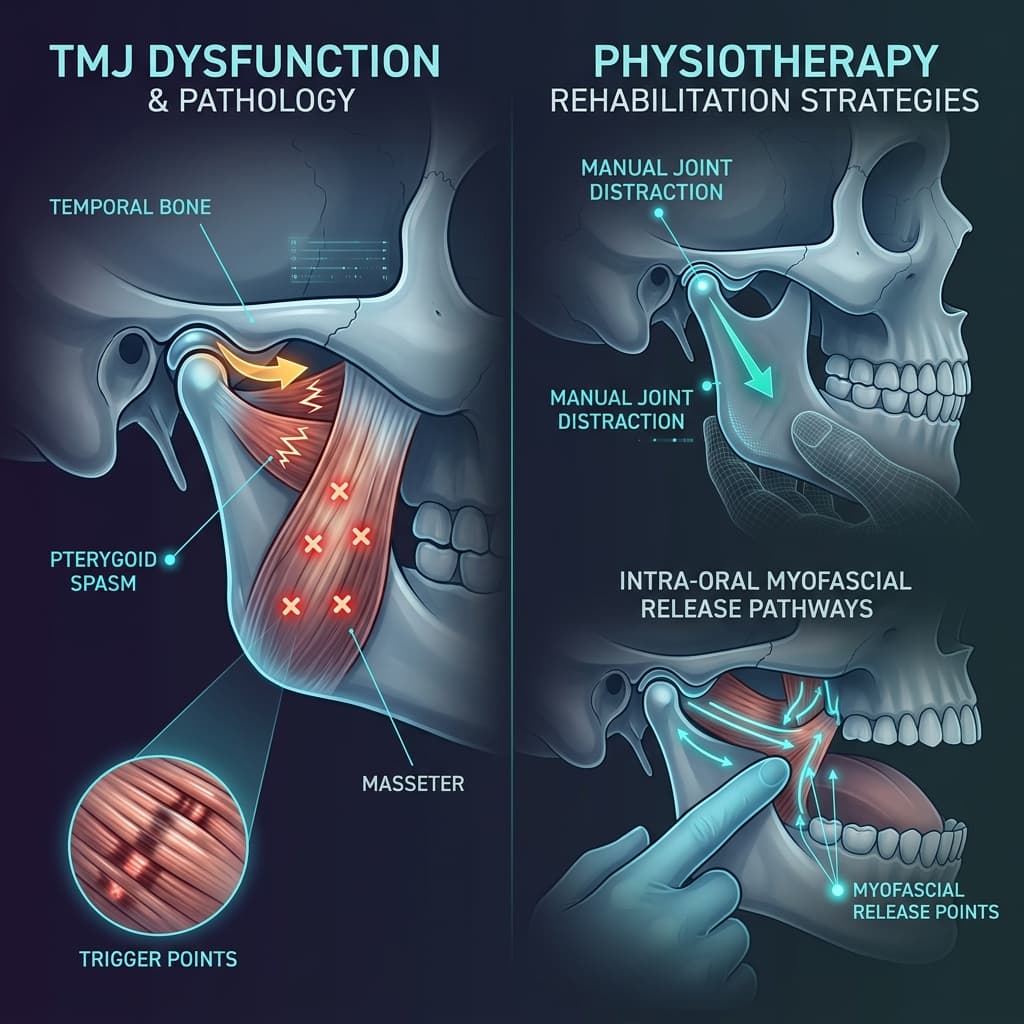
The Temporomandibular Joint (TMJ) connects your lower jaw (mandible) to the temporal bone of your skull. It is one of the most complex, hard-working joints in the human body, combining hinge action with sliding motions over a specialized fibrocartilaginous disc.
When this articular disc slips out of position or the surrounding masticatory muscles go into spasm, patients experience TMJ Dysfunction (TMD). Symptoms include clicking, popping, locked jaw, severe pain during chewing, ear fullness, and chronic tension headaches.
Common Causes of TMJ Pain in Modern Lifestyles
- Bruxism (Teeth Grinding & Clenching): Often subconscious during high-stress work or sleep, creating immense pressure on the lateral pterygoid and masseter muscles.
- Forward Head Posture ("Tech Neck"): Sitting for 8+ hours with forward-slumped neck alters mandibular resting position, pulling the jaw backward and compressing the retrodiscal pad.
- Post-Dental Extraction Strain: Prolonged wide jaw opening during root canals or wisdom tooth extractions can overstretch the TMJ capsule.
- Disc Displacement with Reduction: The characteristic "click" occurs when the displaced disc pops back into place during jaw opening.
The Athletlance TMJ Physiotherapy Protocol
Physiotherapy is recognized as the first-line non-surgical treatment for TMJ disorders. Our specialized protocol includes:
1. Intra-Oral Myofascial Trigger Point Release
Using sterile clinical gloves, the physiotherapist gently accesses the deep pterygoid and masseter muscles inside the mouth, applying sustained ischemic pressure to deactivate chronic muscle knots that dental nightguards cannot address.
2. TMJ Joint Distraction & Mobilization
Gentle downward and forward manual traction on the mandible creates space in the joint cavity, reducing disc compression and restoring smooth tracking.
3. Rocabado 6x6 Jaw Stabilization Exercises
Specific neuromuscular retraining drills that teach the tongue to sit on the palate ("cluck position") and retrain symmetrical jaw opening without deviation.
4. Upper Cervical Spine Correction (C1-C3)
The trigeminocervical nucleus links sensory signals from the upper neck to the jaw. Releasing suboccipital tightness frequently eliminates jaw pain and referred temple headaches.
If you suffer from jaw stiffness or painful clicking in Hyderabad (Hitech City, Kondapur, Miyapur, or Banjara Hills), book a specialized TMJ assessment with Athletlance today.
Questions Answered In This Article
Yes. TMJ physiotherapy uses intra-oral pterygoid myofascial release, masseter trigger point decompression, and manual joint distraction to realign the jaw disc and eliminate clicking, pain, and headaches.
Related Recovery & Rehab Guides
Diastasis Recti Recovery: Evidence-Based Home Exercises & Pelvic Floor Rehab
Learn how to safely repair postpartum abdominal separation (Diastasis Recti) using clinically-proven pelvic floor exercises. Avoid dangerous routines and recover in the comfort of your home.
What 10 Hours of Sitting Does to Your Body: An IT Professional's Survival Guide
Your hip flexors shorten, glutes shut down, and intradiscal pressure surges by 200%. A physiotherapist breaks down hour-by-hour what happens to your spine during coding sprints in Hyderabad IT hubs.
Walking 10,000 Steps Daily But Knees Still Hurt? Here's Why (And What Actually Works)
Walking is great for heart health, but it does not strengthen joint stabilizers. Without proper alignment and quad strength, 10,000 steps can accelerate knee cartilage wear. Here is the clinical fix.