Diastasis Recti Recovery: Evidence-Based Home Exercises & Pelvic Floor Rehab

6+ Years Exp
Important Medical Disclaimer
The information provided in this article is for educational purposes and is quite generic. While general clinical guidelines are often helpful, they cannot replace a professional medical diagnosis. We strongly advise you to consult with a certified physiotherapist or doctor before attempting any home treatments or exercises described here.
Understanding Diastasis Recti (Abdominal Separation)
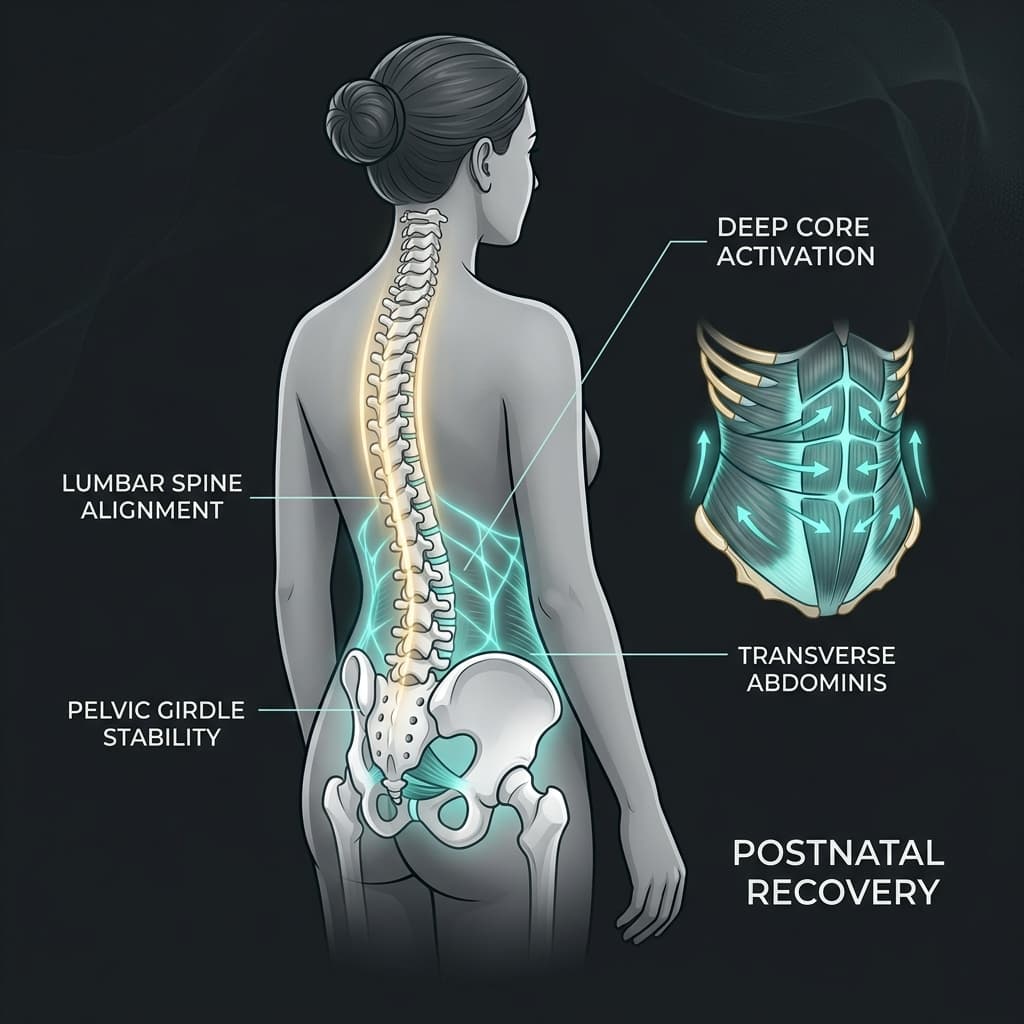
Diastasis Recti Abdominis (DRA) is the widening and thinning of the linea alba—the connective tissue that holds your rectus abdominis ("six-pack") muscles together. This occurs in over 60% of pregnancies due to the growing uterus and hormonal changes (like relaxin) that soften connective tissues.
Many mothers in Hyderabad notice a "pooch" or "dome" in their midsection post-pregnancy that does not go away with traditional weight loss. This is not just a cosmetic concern; unresolved abdominal separation weakens the core, leading to chronic lower back pain, pelvic girdle instability, and urinary incontinence.
The Danger of Traditional Core Exercises
If you suspect you have Diastasis Recti, avoid standard crunches, sit-ups, planks, and double leg lifts. These exercises increase intra-abdominal pressure, forcing the abdominal wall outward and widening the gap further. Healing requires a bottom-up approach, starting with the deepest core muscle: the Transversus Abdominis (TA), coordinated with the Pelvic Floor muscles.
Step-by-Step Clinical Home Recovery Exercises
1. Diaphragmatic Breathing (The Foundation)
Before moving, you must master breathing. Sit comfortably or lie on your back with knees bent.
- Place one hand on your chest and one on your belly.
- Inhale deeply through your nose, letting your belly expand fully (chest should remain still).
- Exhale slowly through pursed lips while gently drawing your navel in toward your spine. Feel the deep core tighten without tucking your pelvis.
- Perform 2 sets of 10 breaths daily.
2. Transversus Abdominis (TA) Activation
Lie on your back with knees bent and feet flat on the floor.
- Inhale to prepare.
- As you exhale, imagine pulling your two hip bones together. Gently draw in your lower abdomen (below the navel) as if putting on a tight pair of jeans.
- Hold this activation for 5 seconds while breathing normally, then relax.
- Repeat 15 times, 2 times a day.
3. Supported Pelvic Tilts
- Lie on your back with knees bent.
- Activate your TA (draw your lower belly in).
- Gently flatten your lower back against the floor by tilting your hips backward.
- Hold for 3 seconds, then return to neutral.
- Do 3 sets of 10 repetitions.
When to Seek Professional Help
If your abdominal gap is wider than 2 fingers, or if you experience lower back pain, pelvic pain, or urine leakage when coughing or laughing, you need a professional assessment. A certified women's health physiotherapist can perform manual myofascial release, guide you through advanced pelvic floor rehabilitation, and monitor your progress safely.
Athletlance provides dedicated female physiotherapists for home visits in Miyapur, Kondapur, Gachibowli, and across Hyderabad, ensuring complete privacy and clinical excellence at your doorstep.
Questions Answered In This Article
Our female therapists provide discreet, specialized care for women navigating pregnancy, postpartum recovery, and pelvic floor issues. We can safely help you manage back pain during pregnancy, heal abdominal separation (Diastasis Recti), and regain core strength after delivery in the privacy of your home.
Diastasis Recti is the separation of the rectus abdominis (six-pack) muscles along the linea alba, commonly occurring during and after pregnancy due to uterine expansion.
Yes. The vast majority of Diastasis Recti cases heal completely with structured physiotherapy focused on transversus abdominis and pelvic floor activation, avoiding exercises that increase intra-abdominal pressure.
Yes. Athletlance has experienced female physiotherapists who provide private home visits for women's health conditions including Diastasis Recti, pelvic floor dysfunction, and postpartum recovery.
Related Recovery & Rehab Guides
Painkillers (NSAIDs) vs Clinical Physiotherapy: An Honest Medical Comparison (Pros & Cons)
A truthful, balanced medical evaluation of pain medications versus physical therapy. We explore the essential benefits of acute pain relief, the real dangers of long-term dependency, the pros and limitations of physiotherapy, and how to safely bridge between them.

Total Knee Replacement (TKR) Home Rehabilitation: Achieving 120° Knee Bending Safely
Recovering from Total Knee Replacement? Learn how early home-visit physiotherapy restores quadriceps strength, reduces swelling, and safely achieves full knee flex angle without clinic travel.
Cervical Spondylosis & Radiculopathy: The Complete Clinical Wiki Guide to Neck Anatomy, Nerve Compression & Non-Surgical Cure
Experiencing shooting arm pain, neck stiffness, or tingling in your fingers? Learn the anatomy of C1-C7 vertebrae, disc herniation vs bone spurs, Spurling's test, and evidence-based manual traction protocols in Hyderabad.