Stop Masking Symptoms.
Treat the Mechanical Cause.
Painkillers, steroid injections, and passive rest only silence the body's alert system. At Athletlance, we locate the joint restriction, nerve entrapment, or muscle imbalance that triggered the breakdown — reversing pathology without surgery.
Where Does It Hurt?
Select your painful body region below or tap directly on the interactive anatomical model. Our clinical triage reveals the hidden mechanical cause, our non-surgical recovery rate, and your dedicated specialist in Hyderabad.
Neck & Cervical Spine (Tech Neck)
“Stiff neck when waking up, sharp pinching turning your head while driving, or tingling radiating down the arm into the fingers.”
Typical Symptoms Reported by Patients
C5-C7 disc compression or facet joint restriction narrowing neural foramina and fatiguing deep cervical flexors.
Manual axial traction vectors, Maitland facet decompression, deep neck flexor stabilization, and neural flossing.

Inside the Anatomy: Cause vs. Symptom Breakdown
Examine our high-resolution 3D medical diagnostics below. See what actually happens beneath the surface and how targeted physical therapy corrects the underlying pathology.
Cervical Spondylosis & Radiculopathy
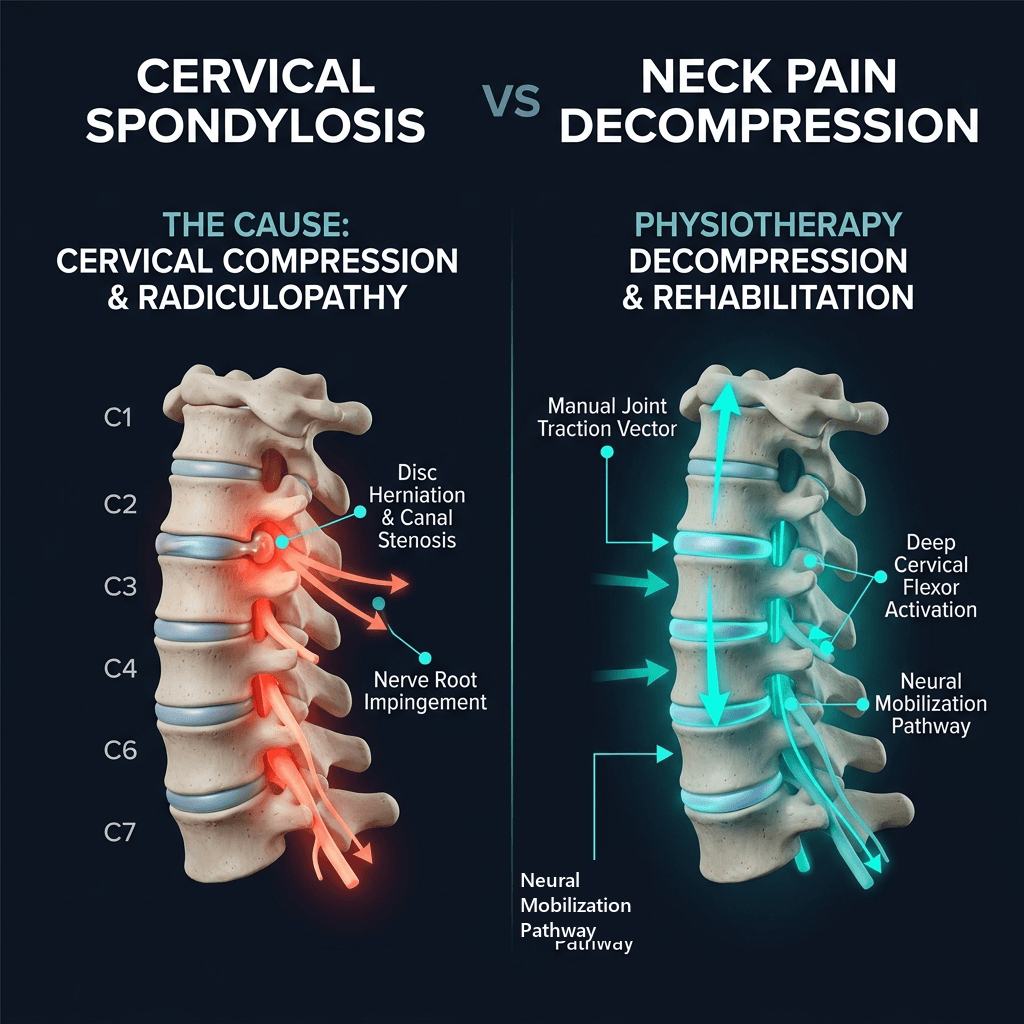
- •Stiff neck when waking up or turning head while driving
- •Shooting electric pain or numbness radiating into shoulder and fingers
- •Chronic upper back burning between shoulder blades after computer work
- •C5-C7 disc dehydration & protrusion narrowing the neural foramen
- •Facet joint capsule compression pinching the cervical nerve root
- •Deep cervical flexor muscle inhibition from forward head posture
- •Manual axial traction vectors expanding the disc height
- •Maitland facet joint distraction to release pinched nerve roots
- •Neuromuscular deep neck flexor stabilization & neural flossing
Sciatica & Lumbar Slip Disc
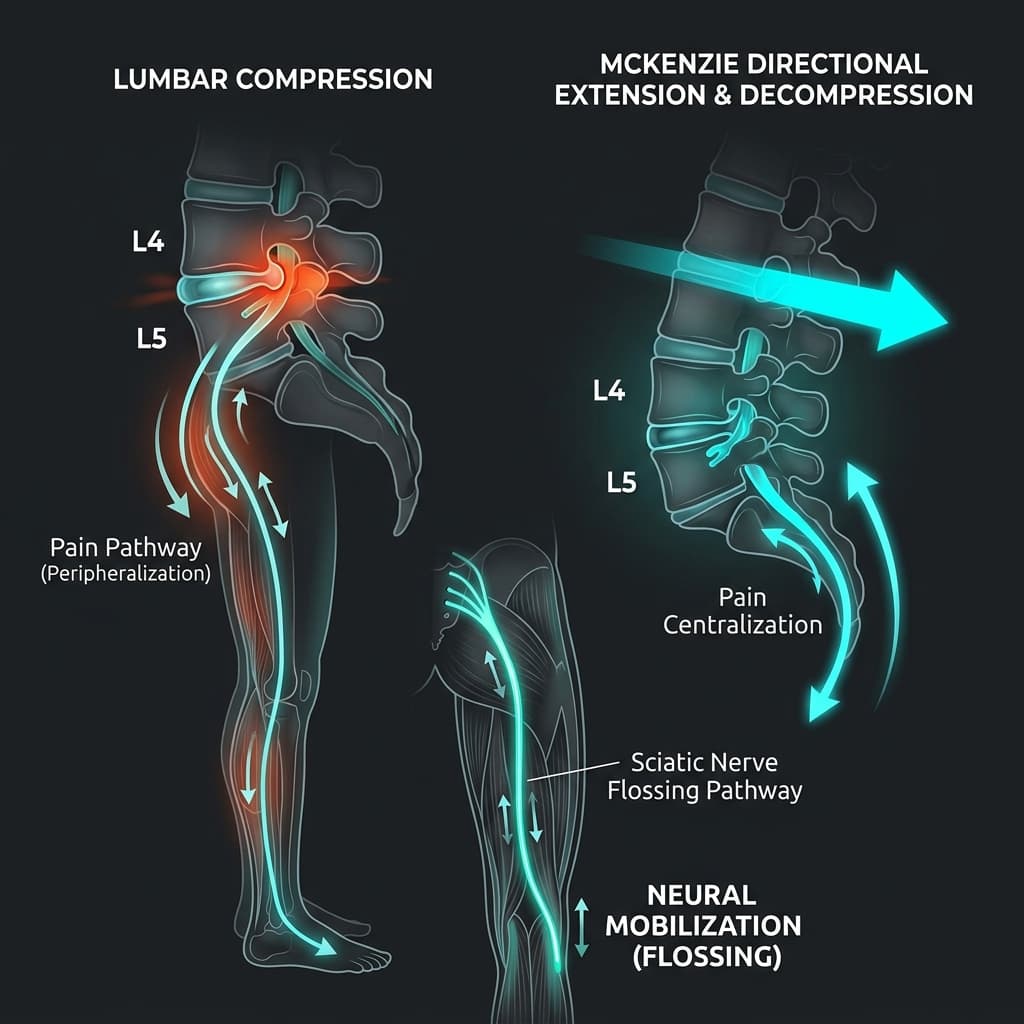
- •Piercing lower back pain when standing up from a chair
- •Electric, shooting agony running down the buttock into calf or heel
- •Pins and needles, burning sensation, or toe weakness
- •L4-L5 or L5-S1 disc protrusion herniating posterolaterally
- •Physical impingement and chemical inflammation of the sciatic nerve
- •Multifidus spinal stabilizer shutdown causing abnormal shearing load
- •McKenzie directional preference extension to centralize disc nucleus
- •Manual intervertebral space decompression vectors
- •Sciatic nerve mobilization (neural flossing) to free nerve adhesions
Knee Osteoarthritis (Joint Preservation)
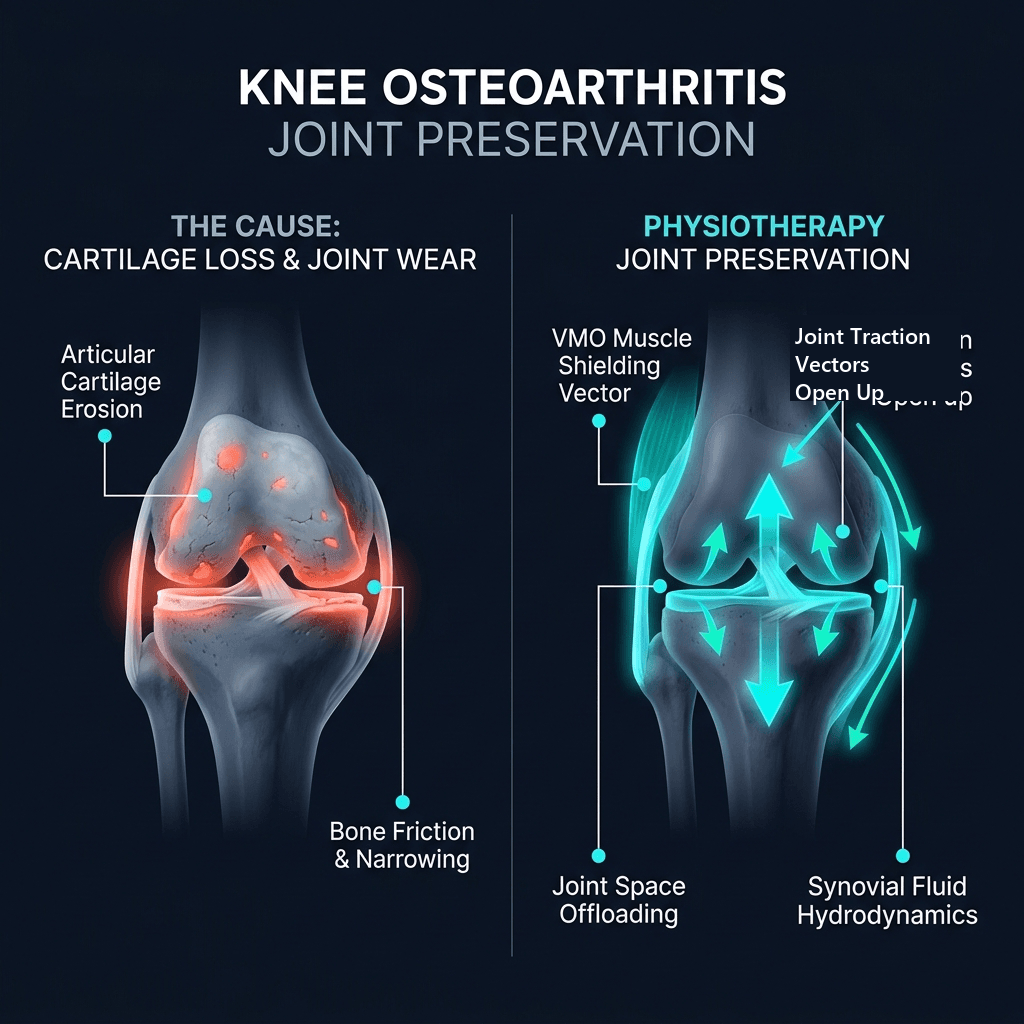
- •Crepitus, crunching, or grinding sounds inside the kneecap
- •Sharp pain when descending stairs or standing from a deep squat
- •Morning knee joint stiffness taking 15-20 minutes to loosen
- •Articular cartilage wear leading to subchondral bone-on-bone friction
- •Lateral patellar maltracking pulling the kneecap out of alignment
- •Atrophy of the Vastus Medialis Oblique (VMO) shock-absorbing muscle
- •VMO quad shielding protocol to cushion compressive joint forces
- •Maitland tibiofemoral distraction opening narrowed joint space
- •Kinetic chain closed-loop loading to stimulate synovial fluid nourishment
Frozen Shoulder (Adhesive Capsulitis)
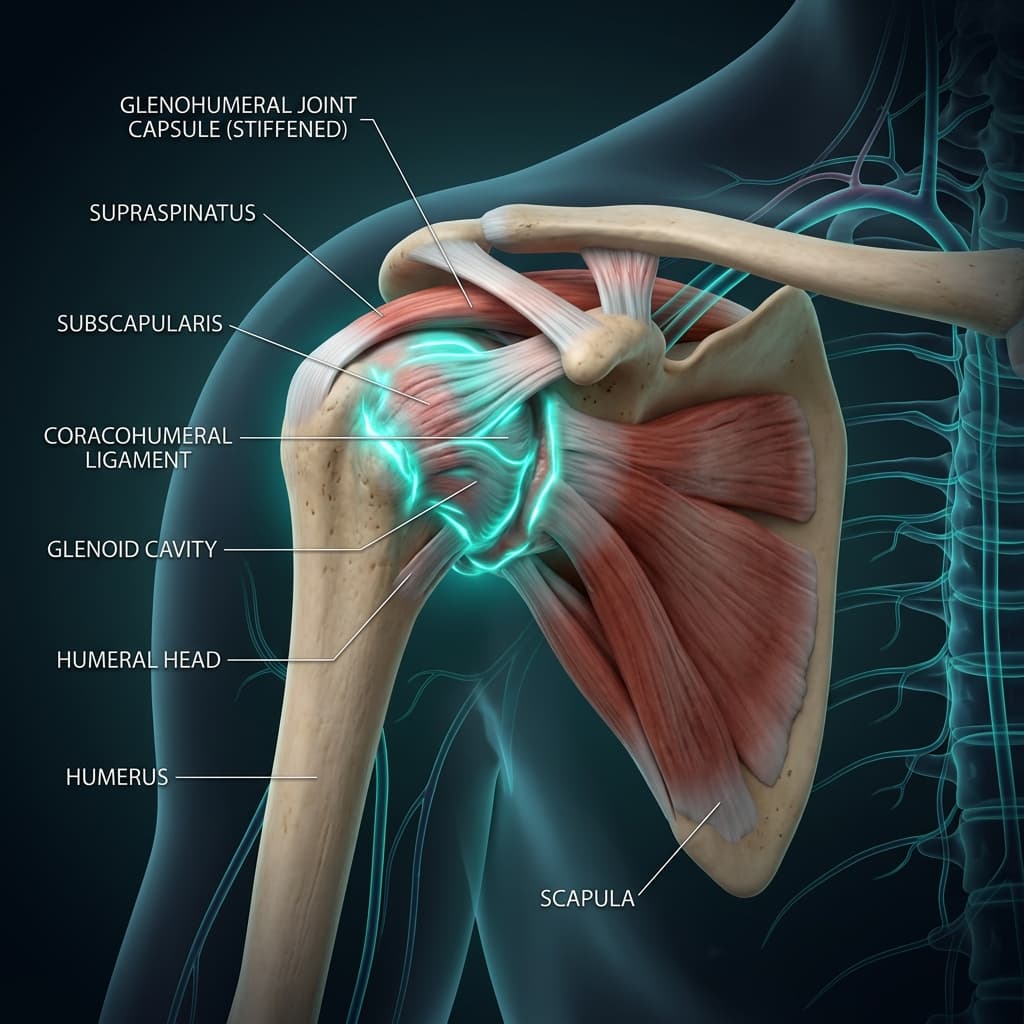
- •Inability to lift the arm overhead to reach high shelves or comb hair
- •Excruciating pain reaching behind the back or fastening clothing
- •Dull, throbbing night pain preventing sleep on the affected side
- •Fibrotic thickening and contracture of the glenohumeral capsule
- •Adhesion of the coracohumeral ligament locking humeral head rotation
- •Periscapular spasm and loss of scapulohumeral rhythm
- •Maitland Grade III/IV rhythmic joint capsule glides and distraction
- •Posterior and inferior capsular stretch without tissue trauma
- •Rotator cuff neuromuscular reactivation and scapular recalibration

Bell's Palsy & Facial Nerve Retraining
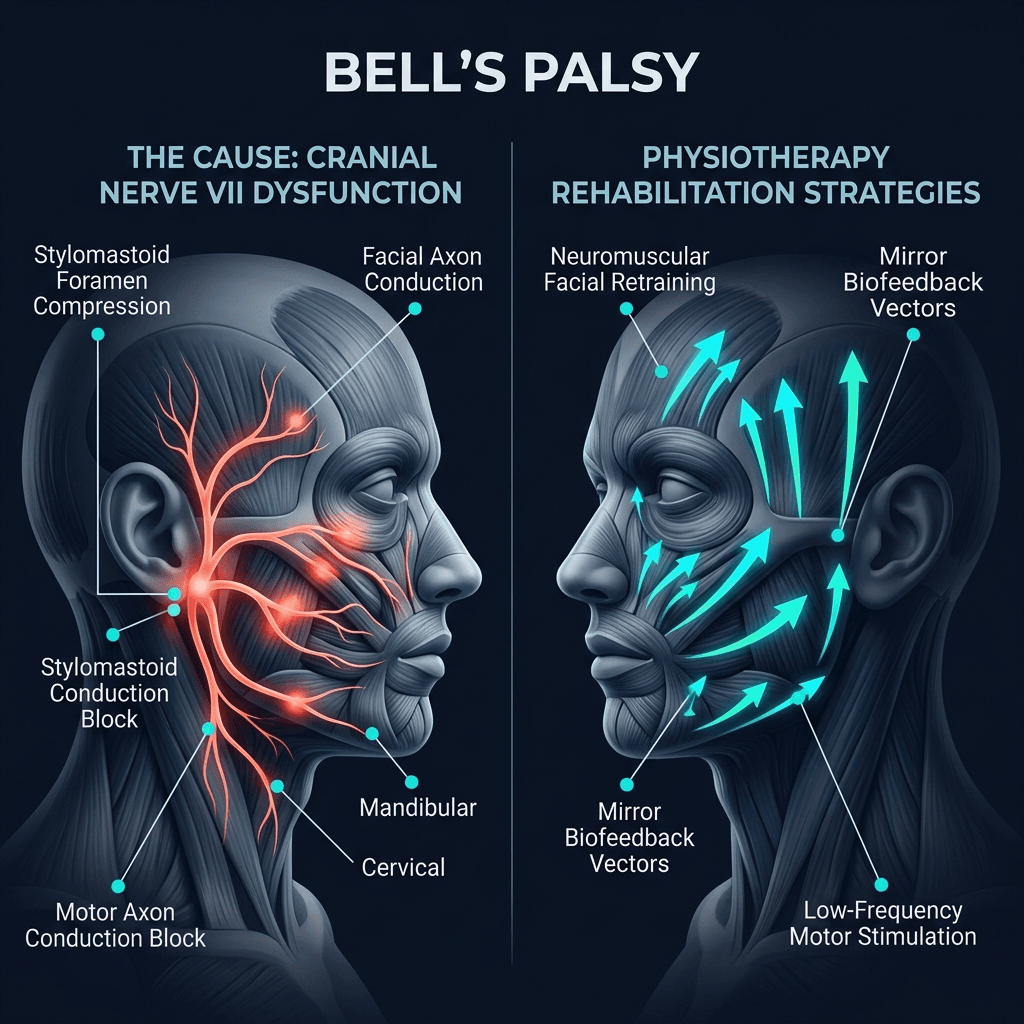
- •Sudden one-sided facial drooping and mouth asymmetry
- •Inability to close the eye on the affected side (Bell's Phenomenon)
- •Food getting trapped in the cheek or drooling while drinking
- •Edema and inflammation of the 7th cranial nerve at stylomastoid foramen
- •Conduction block of temporal, zygomatic, buccal, and mandibular motor axons
- •Loss of resting motor tone in the zygomaticus and orbicularis muscles
- •Low-frequency interrupted galvanic/faradic EMS motor initiation
- •Neuromuscular facilitation (PNF) with gentle upward manual vectors
- •Mirror biofeedback to restore symmetry and strictly prevent synkinesis
Stroke Paralysis & Neuroplastic Rewiring
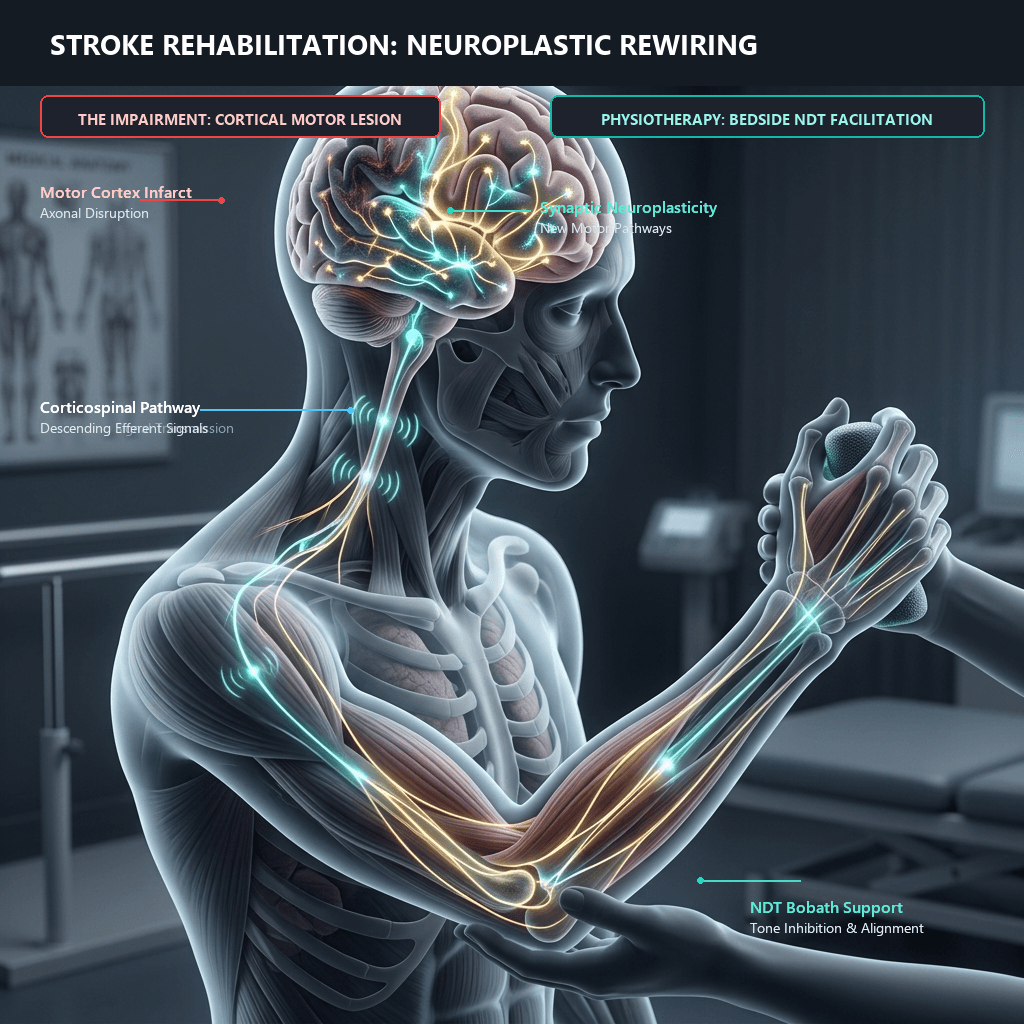
- •Loss of voluntary motor control in arm, hand, or leg (Hemiplegia)
- •Muscle stiffness and involuntary curling of fingers (Spasticity)
- •Loss of sitting balance or inability to bear weight on the affected side
- •Cerebral cortex infarct disrupting descending corticospinal motor tracts
- •Loss of inhibitory upper motor signals leading to hyperactive reflexes
- •Disrupted sensorimotor feedback loop between brain and limbs
- •Neuro-Developmental Treatment (NDT/Bobath) bedside facilitation
- •Synaptic rewiring leveraging the critical 3-6 month neuroplastic window
- •Functional task repatterning, gait training, and spasticity inhibition
Unsure of Your Root Cause?
Schedule a comprehensive 45-minute clinical physical examination with our senior physiotherapists. We evaluate your joint mechanics, neural conduction, and movement patterns at our Miyapur flagship clinic or your home.