Diastasis Recti & Pelvic Floor Recovery: The Definitive Clinical Wiki on Linea Alba Healing, Core Pressure & Safe Exercise

6+ Years Exp
Important Medical Disclaimer
The information provided in this article is for educational purposes and is quite generic. While general clinical guidelines are often helpful, they cannot replace a professional medical diagnosis. We strongly advise you to consult with a certified physiotherapist or doctor before attempting any home treatments or exercises described here.
1. Anatomy of the Abdominal Wall & Linea Alba
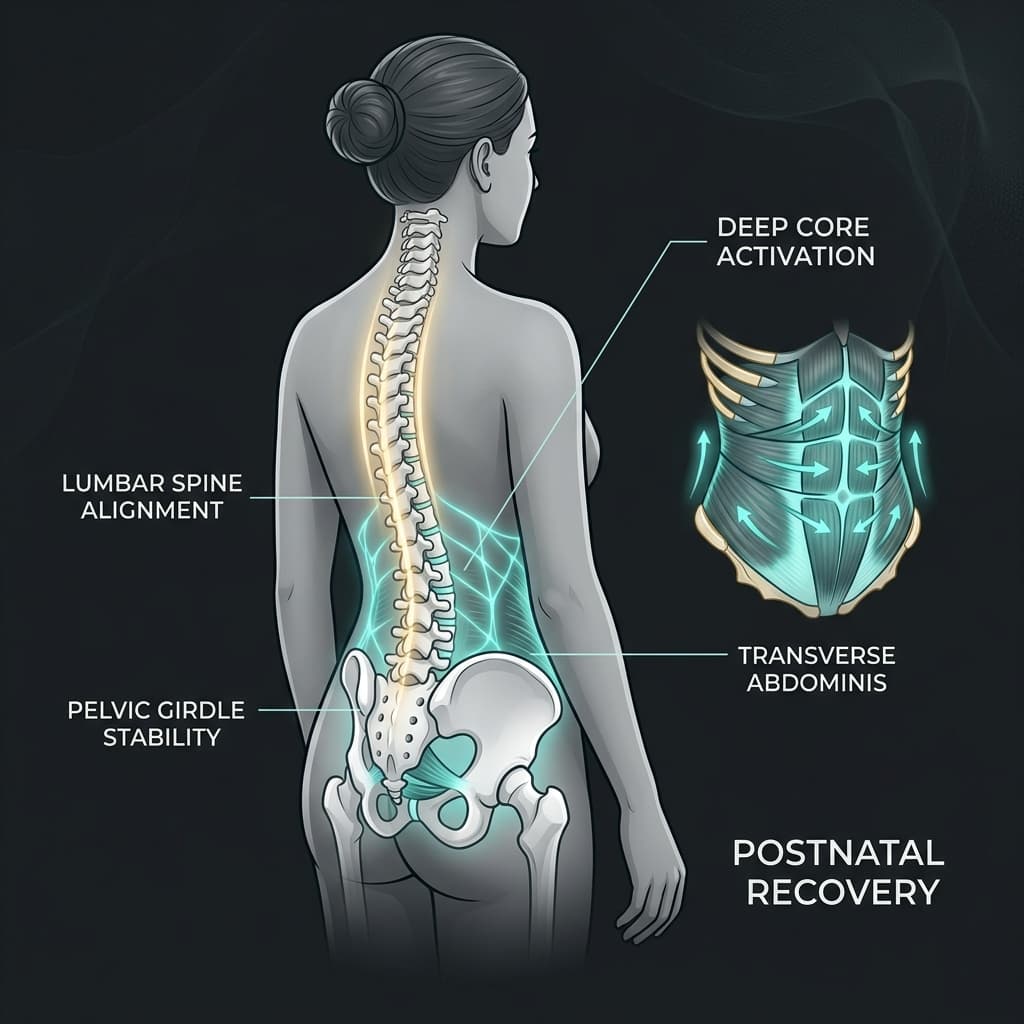
The anterior abdominal wall is formed by four muscle pairs: the rectus abdominis ("six-pack"), external obliques, internal obliques, and the deepest muscle layer, the Transversus Abdominis (TvA).
These muscles join down the exact midline at the Linea Alba—a dense, collagenous aponeurotic band running from the xiphoid process of the sternum down to the pubic symphysis. During the third trimester of pregnancy, hormonal relaxin and mechanical uterine expansion stretch the linea alba, allowing the two rectus muscle bellies to separate sideways.
2. Defining Diastasis Recti Abdominis (DRA)
Diastasis Recti is clinically diagnosed when the Inter-Recti Distance (IRD) exceeds 2 cm (approximately two finger-widths) measured at the umbilicus, 4.5 cm above, or 4.5 cm below during a head-lift test.
Crucially, modern postpartum physiotherapy recognizes that the tension and density of the linea alba are far more important than the width of the gap alone. A 2.5 cm gap with high connective tissue tension generates better functional core stability than a 1.5 cm gap that is soft and sinkable.
3. The Danger of Traditional Crunches and Planks
Many new mothers eager to "get their pre-pregnancy body back" immediately start doing traditional sit-ups, crunches, and front planks. This is counterproductive and dangerous.
Crunches generate immense intra-abdominal pressure (IAP) that pushes forward against the weakened linea alba (causing "doming" or "coning") while pushing downward against an already stretched pelvic floor, frequently triggering stress urinary incontinence or pelvic organ prolapse.
4. The Athletlance 4-Phase Postpartum Restoration Protocol
Phase 1: Diaphragmatic Breath & TvA Co-Activation
Retraining the "Core Canister"—the synergistic coordination between the respiratory diaphragm (roof), pelvic floor (floor), transversus abdominis (corset wall), and multifidus (back stabilizers). Learning to exhale on exertion prevents intra-abdominal blowout.
Phase 2: Progressive Linea Alba Tension Generation
Supine heel slides, dead bugs with breath-syncing, side planks, and isometric pallof presses tension the linea alba via the lateral fascial pull of the internal obliques and transversus abdominis.
Phase 3: Functional Lifting & Baby Transfer Ergonomics
Training the hip hinge and squat pattern while carrying 5-10 kg loads (simulating lifting a growing baby from cribs, car seats, and floor strollers) without abdominal doming.
Phase 4: Impact & Return-to-Running Readiness
Following formal Pelvic, Obstetric and Gynaecological Physiotherapy (POGP) guidelines, running and high-impact sports are reintroduced only after passing single-leg squat, calf raise, and pelvic floor endurance benchmarks (typically 12+ weeks postpartum).
Dr. B. Gowthami (MPT) and our certified female physiotherapists deliver private, highly compassionate home visits for new mothers across Miyapur, Gachibowli, Kondapur, Banjara Hills, and greater Hyderabad.
Related Recovery & Rehab Guides
Diastasis Recti Recovery: Evidence-Based Home Exercises & Pelvic Floor Rehab
Learn how to safely repair postpartum abdominal separation (Diastasis Recti) using clinically-proven pelvic floor exercises. Avoid dangerous routines and recover in the comfort of your home.
Pelvic Floor Physiotherapy: What Every Indian Woman Must Know
Experiencing urine leakage when laughing? Pelvic pain after delivery? These are not 'normal'. Discover how private female physiotherapy can restore pelvic floor function safely at home.
Female Physiotherapist Home Visit in Hyderabad: Private, Professional, Certified
Need a female physiotherapist at home in Hyderabad? Athletlance provides experienced women physio specialists for postpartum, pelvic floor, and general rehabilitation with complete privacy.