Pelvic Floor Physiotherapy: What Every Indian Woman Must Know

6+ Years Exp
Important Medical Disclaimer
The information provided in this article is for educational purposes and is quite generic. While general clinical guidelines are often helpful, they cannot replace a professional medical diagnosis. We strongly advise you to consult with a certified physiotherapist or doctor before attempting any home treatments or exercises described here.
The Condition Nobody Talks About
In India, there is an enormous cultural silence around pelvic floor dysfunction. Women are taught to accept that urinary leakage after childbirth, pelvic pressure, or painful intercourse are "natural consequences" of having children. This could not be further from the truth.
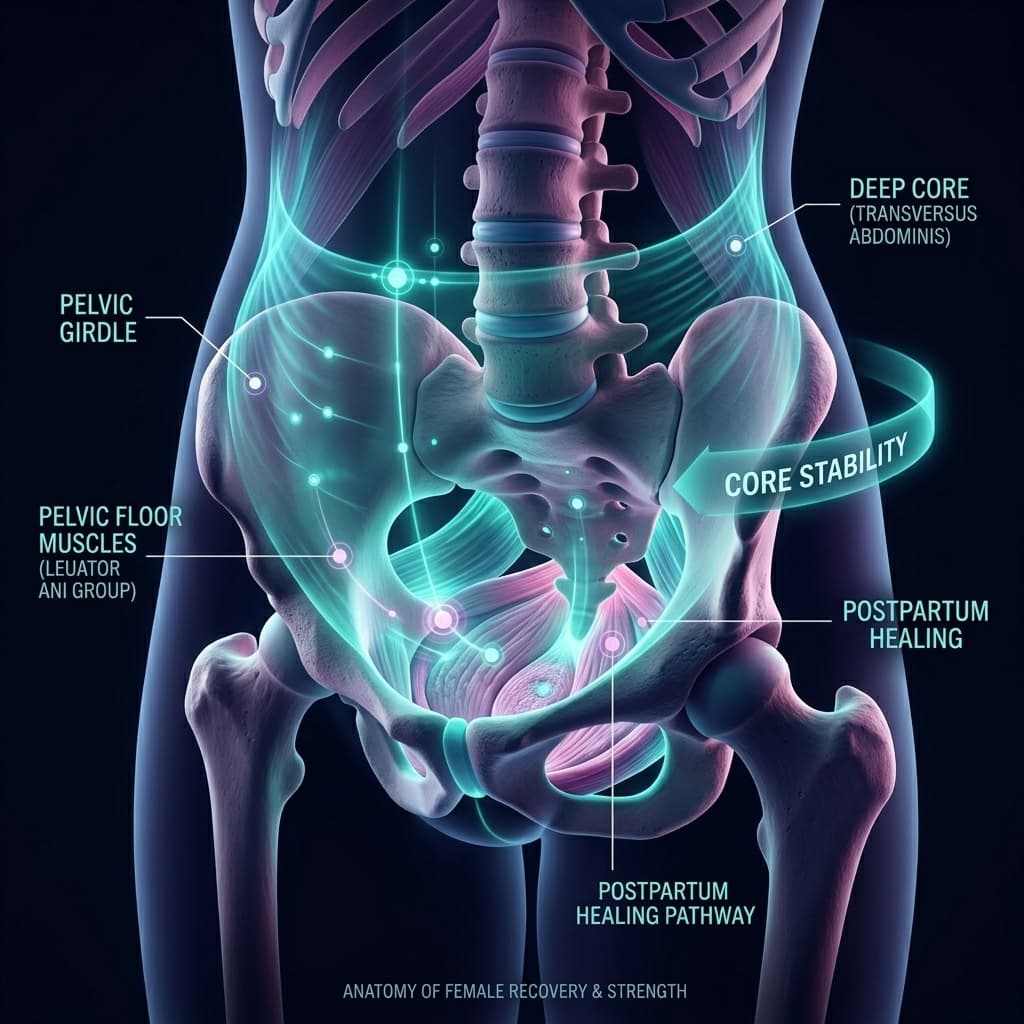
The pelvic floor is a group of muscles and connective tissues that form the base of your pelvis, supporting your bladder, uterus, and bowel. These muscles are subjected to extreme stress during pregnancy and childbirth — whether vaginal or Caesarean. Pelvic floor dysfunction is a medical condition, and physiotherapy has an over 80% success rate in treating it.
Conditions We Treat
- Stress Urinary Incontinence (SUI): Leaking urine when coughing, laughing, sneezing, or exercising.
- Diastasis Recti: Abdominal separation post-pregnancy causing core weakness and back pain.
- Pelvic Girdle Pain (PGP): Pain in the SI joint, pubic symphysis, or hips during pregnancy.
- Post-C-Section Recovery: Scar tissue mobilization to prevent adhesions and restore core function.
- Prolapse Prevention: Strengthening the pelvic floor to support pelvic organs after multiple deliveries.
What a Pelvic Floor Session Looks Like
All our Women's Health sessions are conducted by our female physiotherapist Dr. B. Gowthami in the complete privacy of your home. A typical session includes:
Step 1: External Assessment
We assess breathing patterns, posture, core activation, and hip mobility — all of which are intimately connected to pelvic floor function.
Step 2: Pelvic Floor Activation Training
Most women are told to "do Kegel exercises" without ever being taught the correct technique. We guide you through proper pelvic floor contraction and relaxation — because an overactive, tight pelvic floor can cause just as many problems as a weak one.
Step 3: Functional Movement Integration
Teaching you how to activate your pelvic floor correctly during high-pressure activities: lifting your baby, going up stairs, and returning to exercise safely.
You do not have to live with leakage, pain, or weakness. Our female physiotherapists are available for completely private home visit sessions in Kondapur, Gachibowli, Miyapur, and across Hyderabad. Book today for a confidential consultation.
Related Recovery & Rehab Guides
Diastasis Recti Recovery: Evidence-Based Home Exercises & Pelvic Floor Rehab
Learn how to safely repair postpartum abdominal separation (Diastasis Recti) using clinically-proven pelvic floor exercises. Avoid dangerous routines and recover in the comfort of your home.
Female Physiotherapist Home Visit in Hyderabad: Private, Professional, Certified
Need a female physiotherapist at home in Hyderabad? Athletlance provides experienced women physio specialists for postpartum, pelvic floor, and general rehabilitation with complete privacy.
Pelvic Floor Physiotherapy in Hyderabad: Treating Leakage, Prolapse & Postpartum Weakness
Urinary leakage, pelvic heaviness, or postpartum weakness? Discover how specialized pelvic floor physiotherapy from a female physiotherapist can restore your confidence and quality of life.