Plantar Fasciitis & Heel Pain: The Biomechanical Wiki Guide to the Windlass Mechanism, Rathleff Protocol & Permanent Relief

7+ Years Exp
Important Medical Disclaimer
The information provided in this article is for educational purposes and is quite generic. While general clinical guidelines are often helpful, they cannot replace a professional medical diagnosis. We strongly advise you to consult with a certified physiotherapist or doctor before attempting any home treatments or exercises described here.
1. Anatomy of the Plantar Aponeurosis
The plantar fascia is a dense, thick band of fibrous connective tissue originating from the medial tubercle of the calcaneus (heel bone) and fanning forward to insert into the plantar plates of the metatarsophalangeal (MTP) joints and proximal phalanges of all five toes.
It acts as a dynamic mechanical tie-rod that supports the medial longitudinal arch of the foot, storing and releasing elastic strain energy during the stance-to-toe-off phase of human locomotion.
2. The Windlass Mechanism: How the Foot Locks and Unlocks
When you take a step and your great toe dorsiflexes (bends upward) during terminal stance, the plantar fascia is pulled tightly around the metatarsal heads like a cable around a windlass drum. This shortens the distance between the heel and the ball of the foot, elevating the medial arch and transforming the foot from a supple shock absorber into a rigid propulsion lever.
3. Why Does Heel Pain Strike Hardest in the Morning?
During sleep, the foot rests in passive plantarflexion, allowing the micro-tears in the plantar fascia to heal in a shortened, contracted state. Upon taking your very first step out of bed, body weight abruptly forces the foot into 90-degree dorsiflexion, violently stretching and re-tearing the healing collagen fibers. This produces intense, sharp, lancinating subcalcaneal pain.
4. The Rathleff High-Load Strength Protocol (Gold Standard)
Groundbreaking clinical trials published in the Scandinavian Journal of Medicine & Science in Sports demonstrated that high-load progressive tensile strength training is vastly superior to passive stretching for chronic plantar fasciitis.
The Rathleff Exercise:
- Stand on the edge of a step with a rolled towel placed under the toes to maximize dorsiflexion (activating the Windlass mechanism).
- Perform calf raises: 3 seconds concentric up, 2 seconds isometric hold at the peak, 3 seconds eccentric lowering.
- Progressively load with a backpack containing weights (12RM to 8RM) performed every other day for 12 weeks.
5. Advanced Manual Therapy & Dry Needling
Our clinical team combines the Rathleff protocol with:
- Deep Intramuscular Dry Needling: Deactivating hyperactive trigger points in the gastrocnemius, soleus, and tibialis posterior muscles that maintain excessive calf tension.
- Talocrural & Subtalar Joint Mobilization: Restoring restricted ankle dorsiflexion to eliminate compensatory heel overload.
- Dynamic Kinesio Taping (Low-Dye Technique): Providing immediate mechanical arch offloading for pain-free walking during acute flare-ups.
Athletlance provides rapid-relief plantar fasciitis home visits and clinic appointments across Hyderabad (Miyapur, Kondapur, Gachibowli, and Beeramguda).
Related Recovery & Rehab Guides
Avoiding Back Surgery: How Manual Physiotherapy Cures Sciatica & Slip Disc
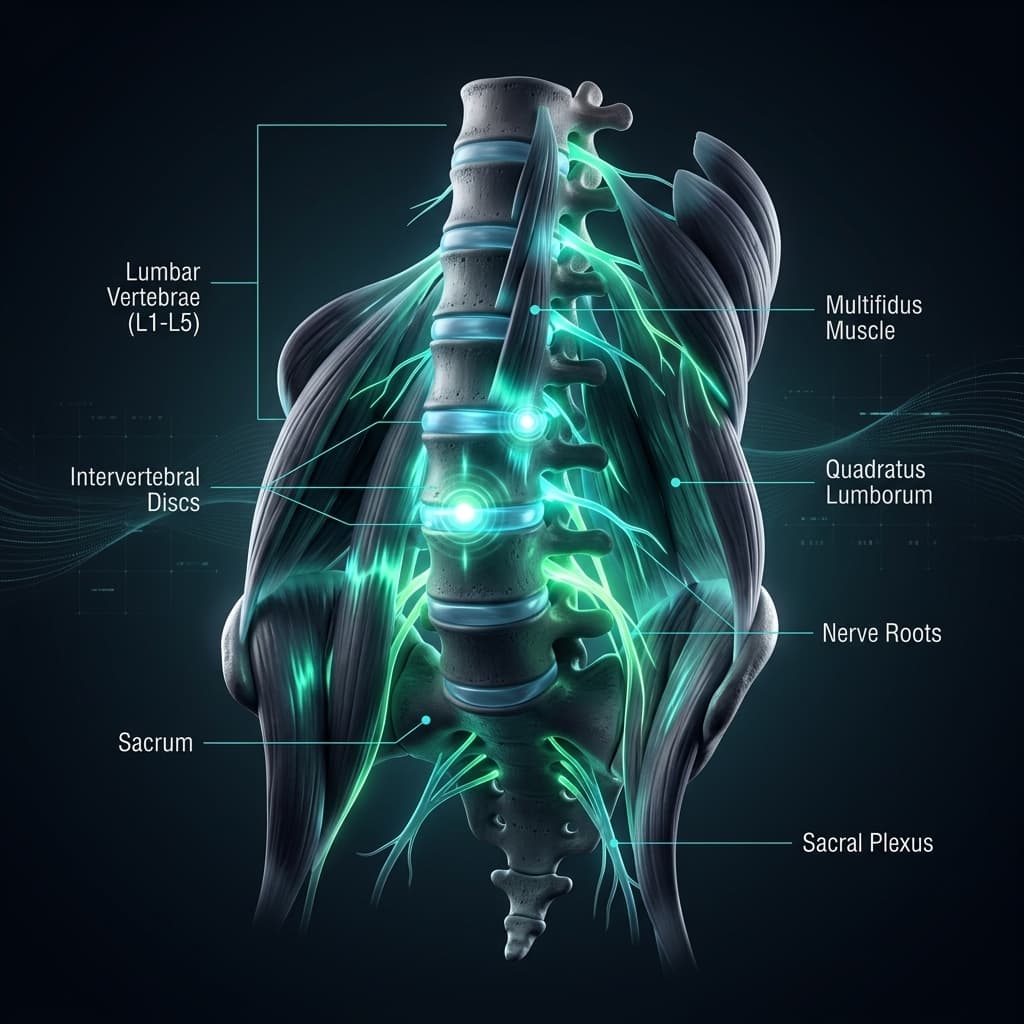
Suffer from shooting leg pain or chronic lower back stiffness? Discover how advanced manual therapy mobilizations (Mulligan & Maitland) restore disc health without spinal surgery.
Total Knee Replacement Recovery: A Guide for Jubilee Hills Residents
Recovering from a TKR surgery? Discover why early, supervised home physiotherapy is crucial for restoring full knee bending and walking safely.

Frozen Shoulder (Adhesive Capsulitis): Non-Surgical 3-Stage Recovery Guide in Hyderabad
Severe shoulder stiffness and night pain? Learn how clinical Maitland mobilization, capsular release, and targeted home physiotherapy unfreeze the shoulder without painful surgery in Hyderabad.