Frozen Shoulder (Adhesive Capsulitis): Non-Surgical 3-Stage Recovery Guide in Hyderabad

6+ Years Exp
Important Medical Disclaimer
The information provided in this article is for educational purposes and is quite generic. While general clinical guidelines are often helpful, they cannot replace a professional medical diagnosis. We strongly advise you to consult with a certified physiotherapist or doctor before attempting any home treatments or exercises described here.
Understanding the Three Stages of Frozen Shoulder
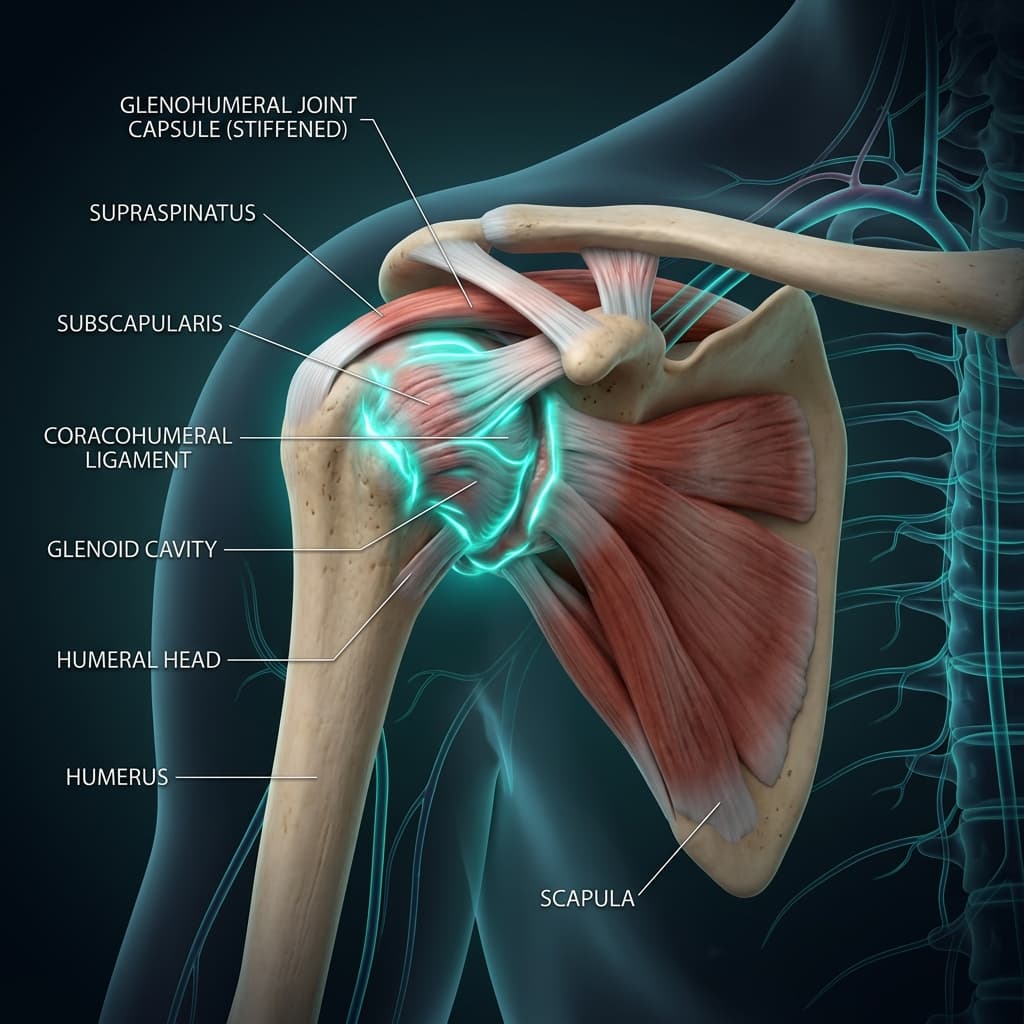
Frozen Shoulder (medically termed Adhesive Capsulitis) is one of the most frustrating musculoskeletal conditions seen at our Hyderabad clinic. The connective tissue surrounding the shoulder joint (the capsule) becomes chronically inflamed, thickens, and tightens, severely restricting arm movement.
Recovery depends entirely on identifying which of the three distinct phases the patient is currently experiencing:
- Stage 1: The Freezing Stage (2 to 9 Months) — Severe pain begins, particularly at night. Any movement causes sharp discomfort, and the shoulder slowly loses range of motion.
- Stage 2: The Frozen Stage (4 to 12 Months) — Pain may slightly diminish, but stiffness peaks. Daily tasks like reaching for a seatbelt, wearing a shirt, or tying hair become nearly impossible.
- Stage 3: The Thawing Stage (6 to 24 Months) — The joint capsule gradually loosens, and mobility begins returning with structured physiotherapy.
Why Forcing the Shoulder Causes Harm
A common mistake patients in Hyderabad make is allowing forceful or aggressive stretching during the early inflammatory 'Freezing' phase. Forcing a tight, inflamed capsule causes micro-tears, triggering severe pain flare-ups and secondary muscle guarding in the trapezius and levator scapulae.
Evidence-Based Physiotherapy Protocols at Athletlance
At our ground-floor Miyapur clinic and through specialized home visits across Hyderabad, we follow a gentle, phased orthopedic rehabilitation roadmap:
- Maitland Glenohumeral Joint Mobilization (Grades I-IV): Gentle, oscillatory joint glides (inferior and posterior) that target the capsule without compressing the subacromial space.
- Spencer Technique & Muscle Energy Techniques (MET): Utilizing the patient's own gentle isometric contractions to relax hypertonic rotator cuff muscles.
- Dry Needling & Myofascial Release: Deactivating trigger points in the infraspinatus, subscapularis, and deltoid to relieve radiating arm ache.
- Therapeutic Modalities: IFT and therapeutic ultrasound to increase local tissue elasticity before mobilization.
- Scapular Stabilization Drills: Restoring normal scapulohumeral rhythm so the shoulder blade moves smoothly during overhead elevation.
Clinical Case Highlight from Dr. Thanmayi (PT)
A 54-year-old school administrator presented at our Miyapur clinic unable to elevate her right arm past 80 degrees (abduction) due to severe Stage 2 frozen shoulder. Through a structured 6-week protocol combining Maitland Grade II-III mobilizations, gentle wand exercises, and home pulley stretches, her range improved to 165 degrees, allowing complete return to work and painless sleep.
Condition Overview
Common Symptoms
- Inability to lift the arm overhead or comb hair
- Severe sharp pain when reaching behind the back or fastening clothes
- Dull, aching night pain that disrupts sleep when lying on the affected side
- Progressive loss of active and passive shoulder range of motion
Why It Occurs (Causes)
- Glenohumeral joint capsule thickening and fibrotic contracture
- Diabetes mellitus (significantly elevates frozen shoulder risk)
- Prolonged immobilization after fracture, stroke, or rotator cuff strain
- Chronic subacromial impingement and untreated rotator cuff tendinitis
How To Avoid It (Prevention)
- Early pendulum and gentle range-of-motion drills after any shoulder injury
- Strict blood sugar control for diabetic individuals to prevent collagen cross-linking
- Avoiding aggressive forceful stretching which worsens capsular inflammation
- Regular scapular posture re-training for desk workers in Hyderabad
Questions Answered In This Article
How do you treat Frozen Shoulder without surgery?
We use a phased, non-surgical protocol combining Maitland glenohumeral joint mobilization (Grades I-IV), Spencer technique, trigger point dry needling, and therapeutic ultrasound. This gently stretches the contracted joint capsule, reduces night pain, and restores overhead arm movement without forceful manipulation under anesthesia.
Related Recovery & Rehab Guides
Avoiding Back Surgery: How Manual Physiotherapy Cures Sciatica & Slip Disc
Suffer from shooting leg pain or chronic lower back stiffness? Discover how advanced manual therapy mobilizations (Mulligan & Maitland) restore disc health without spinal surgery.

Total Knee Replacement Recovery: A Guide for Jubilee Hills Residents
Recovering from a TKR surgery? Discover why early, supervised home physiotherapy is crucial for restoring full knee bending and walking safely.

Frozen Shoulder Treatment: Rapid Recovery Protocol Without Surgery
Struggling to lift your arm due to a Frozen Shoulder? Discover our specialized manual therapy protocol to break scar tissue and restore full shoulder mobility.