Pelvic Floor Physiotherapy in Hyderabad: Treating Leakage, Prolapse & Postpartum Weakness

6+ Years Exp
Important Medical Disclaimer
The information provided in this article is for educational purposes and is quite generic. While general clinical guidelines are often helpful, they cannot replace a professional medical diagnosis. We strongly advise you to consult with a certified physiotherapist or doctor before attempting any home treatments or exercises described here.
The Silent Problem Millions of Women Ignore
1 in 3 women experience urinary incontinence (leaking) at some point in their lives, and yet fewer than 10% ever seek treatment, believing it is an inevitable part of ageing or childbirth. This is completely untrue. Pelvic floor dysfunction is highly treatable — and physiotherapy is the first-line, gold-standard treatment recommended by the International Continence Society.
What Does the Pelvic Floor Do?
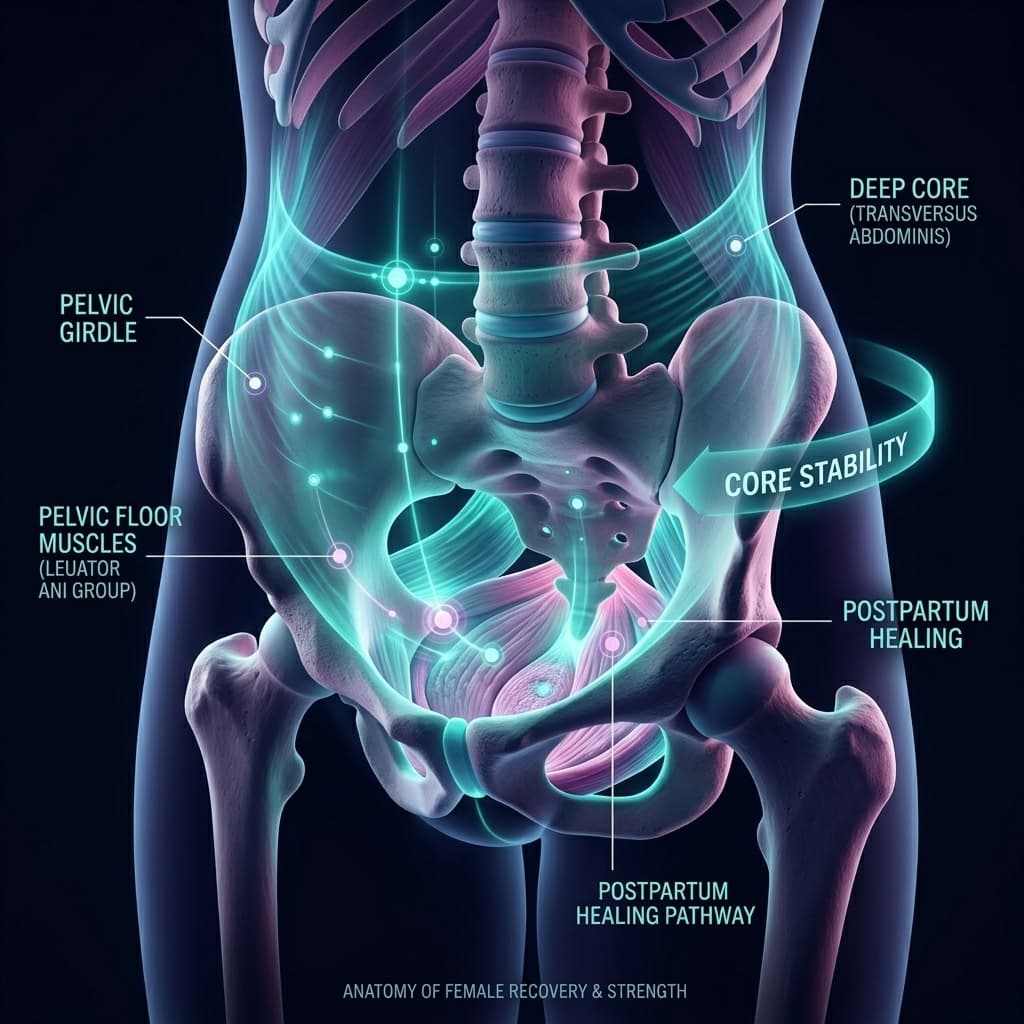
The pelvic floor is a hammock of muscles, ligaments, and fascia forming the base of your pelvis. It has 4 critical functions:
- Support: Holds the bladder, uterus, and rectum in place.
- Sphincter control: Prevents leakage of urine, gas, and stool.
- Sexual function: Contributes to arousal and orgasm.
- Core stability: Works with the diaphragm, transversus abdominis, and multifidus as part of the deep core system.
What Goes Wrong and Why
Pelvic floor dysfunction has two types that are often confused:
- Underactivity (weakness): Most common after childbirth, surgery, or with ageing. Causes stress incontinence (leaking with cough/sneeze/exercise) and prolapse symptoms.
- Overactivity (too tight): Often caused by chronic stress, trauma, or endometriosis. Causes urgency incontinence, pelvic pain, and painful intercourse. Kegel exercises worsen this — which is why self-diagnosing is dangerous.
What Does a Pelvic Floor Physiotherapy Session Involve?
Our female physiotherapists provide a completely private, respectful assessment that includes:
- Detailed history: Bladder diary analysis, symptom questionnaires, obstetric and surgical history.
- External assessment: Checking lumbopelvic posture, breathing pattern, hip flexibility, and scar tissue.
- Internal examination (with consent): Assessing pelvic floor muscle tone, strength, coordination, and endurance. This is only done when clinically necessary and is always performed with full patient consent and explanation.
- Personalised programme: A specific exercise plan — not just generic Kegels — based on your unique findings.
Conditions We Treat
- Stress urinary incontinence (leaking with activity)
- Urge urinary incontinence (sudden, strong urge to go)
- Pelvic organ prolapse (grade 1-2)
- Diastasis Recti (abdominal separation)
- Painful intercourse (vaginismus or dyspareunia)
- Postnatal core and pelvic recovery
- Pelvic girdle pain during pregnancy
You deserve a body that works for you. Our female physiotherapist, Dr. Gowthami, offers completely private pelvic floor assessments with home visits across Hyderabad — including Kondapur, Miyapur, Banjara Hills, and Jubilee Hills. Book a confidential consultation today.
Questions Answered In This Article
The pelvic floor is a group of muscles and ligaments forming the base of the pelvis. They support the bladder, bowel, and uterus. Weakness or tightness causes leakage, prolapse, or pelvic pain — all of which physiotherapy can treat effectively.
Common signs include leaking urine when coughing, sneezing, or laughing (stress incontinence), urgency to urinate, reduced sensation during intercourse, and pelvic heaviness or pressure — particularly after childbirth.
Kegels work for pelvic floor underactivity (weakness), but 30% of women actually have a hypertonic (too tight) pelvic floor where Kegels worsen symptoms. A physiotherapy assessment is essential before starting any pelvic floor exercise program.
Related Recovery & Rehab Guides
Diastasis Recti Recovery: Evidence-Based Home Exercises & Pelvic Floor Rehab
Learn how to safely repair postpartum abdominal separation (Diastasis Recti) using clinically-proven pelvic floor exercises. Avoid dangerous routines and recover in the comfort of your home.
Pelvic Floor Physiotherapy: What Every Indian Woman Must Know
Experiencing urine leakage when laughing? Pelvic pain after delivery? These are not 'normal'. Discover how private female physiotherapy can restore pelvic floor function safely at home.
Female Physiotherapist Home Visit in Hyderabad: Private, Professional, Certified
Need a female physiotherapist at home in Hyderabad? Athletlance provides experienced women physio specialists for postpartum, pelvic floor, and general rehabilitation with complete privacy.