Fibromyalgia & Chronic Pain: How Neuroscience-Based Physiotherapy Breaks the Pain Cycle

6+ Years Exp
Important Medical Disclaimer
The information provided in this article is for educational purposes and is quite generic. While general clinical guidelines are often helpful, they cannot replace a professional medical diagnosis. We strongly advise you to consult with a certified physiotherapist or doctor before attempting any home treatments or exercises described here.
What Happens in the Nervous System During Fibromyalgia?
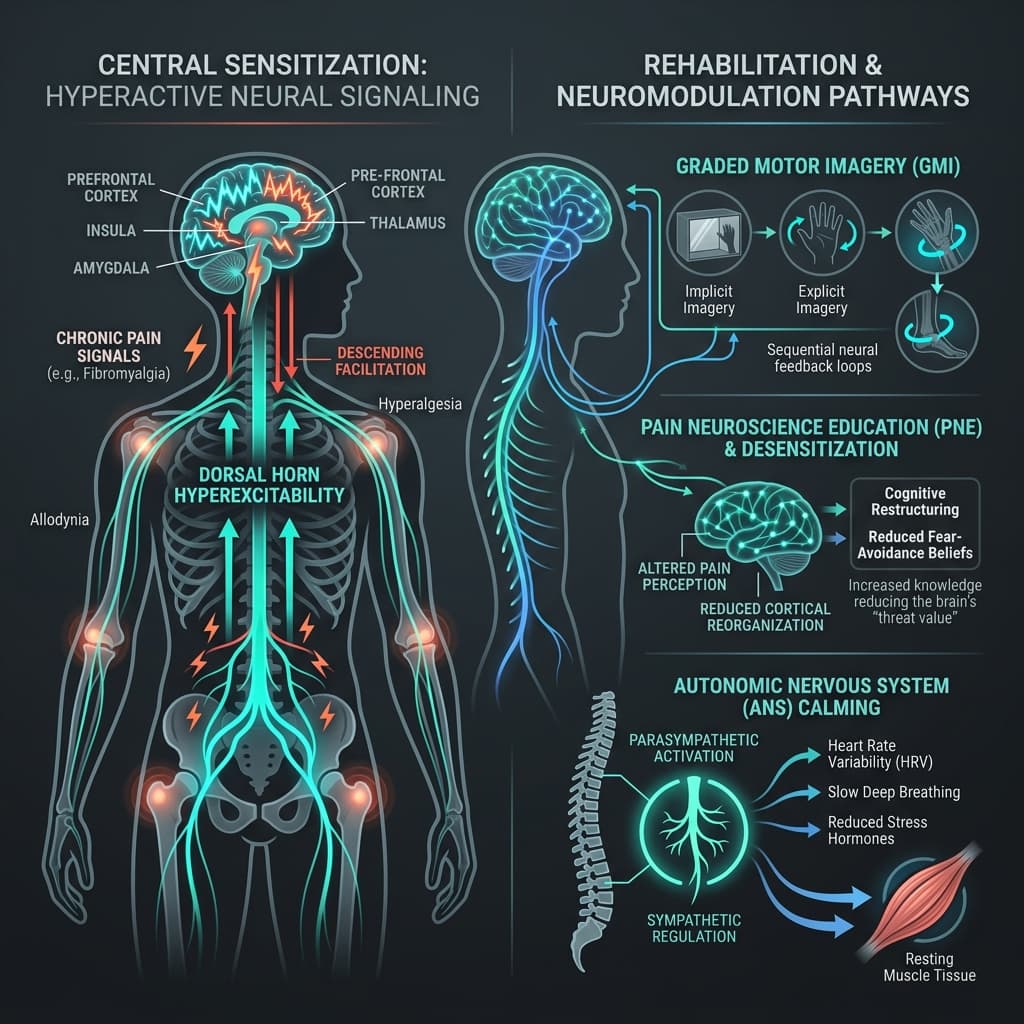
Fibromyalgia is not "all in your head," nor is it simple muscle inflammation. Modern neurobiology understands Fibromyalgia as a condition of Central Sensitization—the volume control dial of the central nervous system (brain and spinal cord) is turned up too high.
Normal sensory inputs (like light touch, temperature changes, or mild movement) are amplified and interpreted by the hypersensitized nervous system as severe pain. This leads to widespread musculoskeletal pain, sleep disturbances, cognitive fog ("fibro fog"), and debilitating fatigue.
Why Traditional "Push Through Pain" Exercise Fails
Well-meaning advice to "just do vigorous cardio" often triggers severe post-exertional symptom exacerbation (flare-ups) in Fibromyalgia patients. The key is micro-dosed, graded pacing that operates strictly below the nervous system's danger alarm threshold.
Evidence-Based Physiotherapy Pillars for Fibromyalgia
1. Pain Neuroscience Education (PNE)
Understanding that chronic pain reflects nervous system sensitivity rather than ongoing tissue damage immediately reduces fear-avoidance behavior, lowering adrenaline and cortisol levels that fuel pain sensitivity.
2. Graded Motor Imagery & Mirror Therapy
For patients experiencing extreme movement sensitivity, we start by training brain motor maps through visual observation and non-threatening imagined movement before physical execution.
3. Micro-Progressive Aerobic Conditioning
Short, 5-to-10 minute bouts of gentle walking or seated rhythmic movements stimulate natural endorphin release and regulate descending pain-inhibitory pathways in the brainstem without causing fatigue crashes.
4. Vagal Nerve Stimulation & Diaphragmatic Breathwork
Slow, deep diaphragmatic breathing activates the parasympathetic nervous system, shifting the body out of chronic "fight or flight" and reducing generalized muscle hypertonicity.
Athletlance provides compassionate, private home visit physiotherapy for Fibromyalgia and chronic pain sufferers across Miyapur, Kukatpally, Banjara Hills, Jubilee Hills, and Secunderabad. Let us help you reclaim your quality of life safely.
Questions Answered In This Article
We use evidence-based Pain Neuroscience Education (PNE), Graded Motor Imagery, and nervous system pacing to desensitize hyperactive pain pathways without triggering symptom flare-ups.
Related Recovery & Rehab Guides
Avoiding Back Surgery: How Manual Physiotherapy Cures Sciatica & Slip Disc
Suffer from shooting leg pain or chronic lower back stiffness? Discover how advanced manual therapy mobilizations (Mulligan & Maitland) restore disc health without spinal surgery.

Total Knee Replacement Recovery: A Guide for Jubilee Hills Residents
Recovering from a TKR surgery? Discover why early, supervised home physiotherapy is crucial for restoring full knee bending and walking safely.
Frozen Shoulder (Adhesive Capsulitis): Non-Surgical 3-Stage Recovery Guide in Hyderabad
Severe shoulder stiffness and night pain? Learn how clinical Maitland mobilization, capsular release, and targeted home physiotherapy unfreeze the shoulder without painful surgery in Hyderabad.