Knee Osteoarthritis (OA) Clinical Wiki: Kellgren-Lawrence Stages, Cartilage Biomechanics & Evidence-Based Joint Preservation
6+ Years Exp
Important Medical Disclaimer
The information provided in this article is for educational purposes and is quite generic. While general clinical guidelines are often helpful, they cannot replace a professional medical diagnosis. We strongly advise you to consult with a certified physiotherapist or doctor before attempting any home treatments or exercises described here.
1. The Myth of 'Bone-on-Bone' Wear and Tear
For decades, knee osteoarthritis (OA) was mistakenly viewed as passive, irreversible "wear and tear." Modern orthopedic science reveals that OA is an active, whole-joint organ disease characterized by low-grade inflammation, subchondral bone remodeling, and altered synovial fluid viscosity.
Articular hyaline cartilage has no direct blood vessels or nerves. Cartilage receives all its nutrients through dynamic joint loading and fluid exchange (imbibition). Complete rest and avoidance of movement actually starves knee cartilage, accelerating joint degradation.
2. The Kellgren-Lawrence (KL) Radiographic Grading Scale
Orthopedic surgeons and physiotherapists grade knee OA severity using standing weight-bearing X-rays:
- Grade 1 (Doubtful): Minute osteophytic lipping; joint space narrowing doubtful. Management: 100% reversible with biomechanical correction and weight optimization.
- Grade 2 (Minimal): Definite osteophytes; possible joint space narrowing on the medial compartment. Management: Intensive muscle strengthening and gait retraining; excellent long-term prognosis.
- Grade 3 (Moderate): Multiple moderate osteophytes; definite joint space narrowing; some subchondral sclerosis. Management: Targeted offloading manual therapy, hyaluronic cushioning support, and high-load resistance training.
- Grade 4 (Severe): Severe joint space loss; marked sclerosis; deformity of bone contour. Management: Structured pre-habilitation or conservative joint preservation protocol to prolong native joint life.
3. The Quadriceps-Hamstrings Muscular Shock Absorber
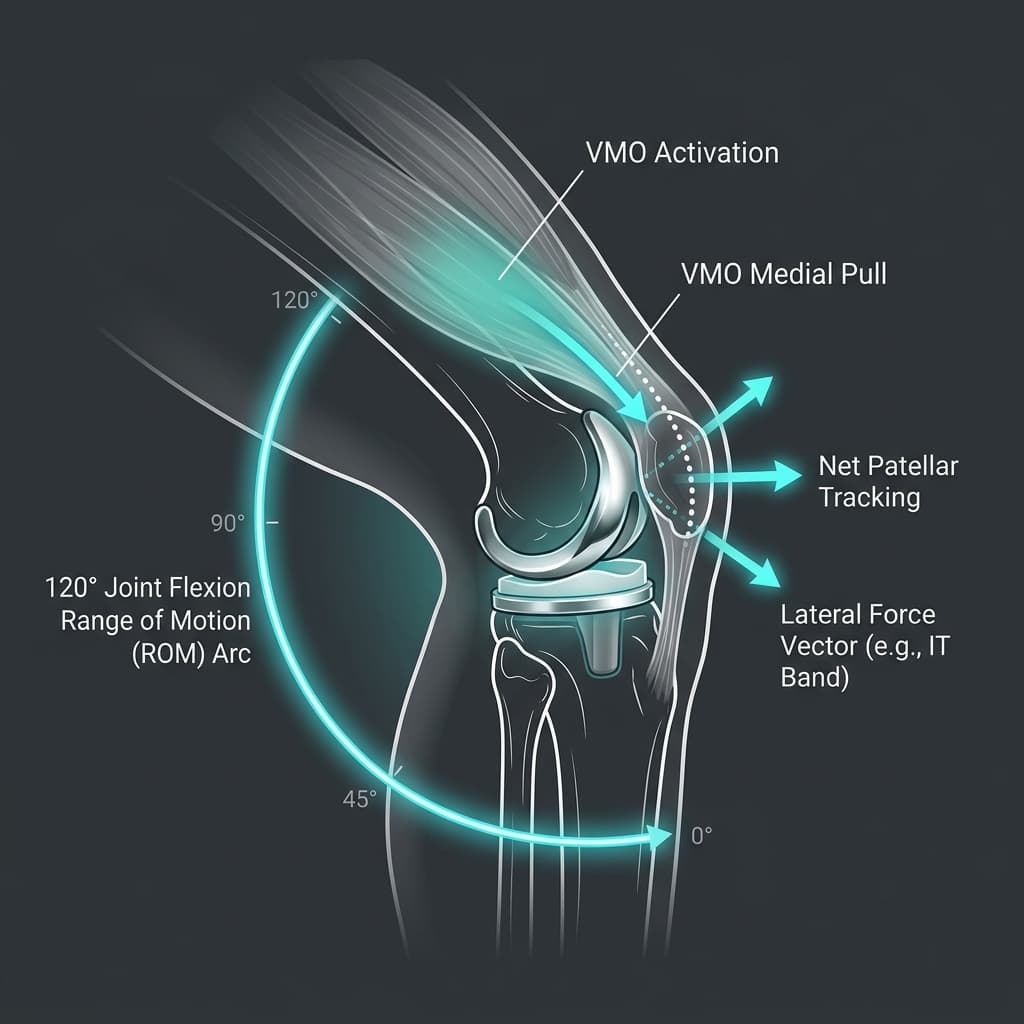
The quadriceps muscle group—particularly the Vastus Medialis Oblique (VMO)—serves as the primary active deceleration brake during walking, stair climbing, and squatting. Every 1 kg of quadriceps strength deficit increases compressive impact loads on the tibial plateau by up to 4 kg.
4. The Athletlance Joint Preservation Protocol
A. Closed-Kinetic Chain (CKC) Progressive Loading
Unlike open-chain knee extensions that create high patellofemoral shear forces, CKC exercises (wall squats, Spanish squats with resistance bands, and Bulgarian split squats) stimulate cartilage proteoglycan synthesis safely.
B. Hip Abductor & Gluteus Medius Activation
Weak hip abductors cause the pelvis to drop during single-leg stance (Trendelenburg sign), creating an increased knee adduction moment (KAM) that crushes the medial joint compartment. Strengthening the gluteus medius reduces medial knee loading by up to 25%.
C. Manual Joint Distraction & Patellar Mobilization
Gentle Maitland Grade II/III inferior and superior patellar glides restore normal arthrokinematics and stretch the tight lateral retinaculum.
If you or an elderly family member suffer from knee stiffness or crepitus in Hyderabad (Miyapur, Kukatpally, Banjara Hills, or Tellapur), schedule an evidence-based joint preservation evaluation with Athletlance.
Questions Answered In This Article
Yes. For mild to moderate knee osteoarthritis, physiotherapy using quadriceps strengthening, manual joint mobilization, and gait correction can significantly reduce pain and delay or avoid the need for knee replacement surgery.
Low-impact exercises like straight leg raises, seated knee extensions, swimming, and cycling are most effective. Avoid high-impact activities like running on hard surfaces which increase joint stress.
Most patients with mild-moderate knee OA see significant pain reduction within 8-12 sessions. A maintenance program of 2-3 sessions per month is recommended for long-term joint health.
Related Recovery & Rehab Guides
Senior Safety: Preventing Falls with Physiotherapy in Secunderabad
Falls are the leading cause of injury in seniors. Learn how targeted balance training and home safety assessments can keep your elderly loved ones safe.

Elite Sports Recovery at Home: Cupping & Dry Needling in Hyderabad
Overtraining? Muscle spasms? Experience clinical-grade sports recovery including dry needling, cupping, and deep tissue release in the comfort of your home.
Your MRI Shows a 'Bulging Disc' — Here's Why That's Probably Not Your Problem
Over 50% of people with ZERO back pain have bulging discs on their MRI scans. Learn why imaging scans frequently mislead patients into unnecessary surgery, and what clinical assessment actually matters.